Construction CostsOctober 15, 202611 min read
By Lesel Buildworks|Architecture | Engineering | Construction
Loading

Construction Costs
By Lesel Buildworks|Architecture | Engineering | Construction
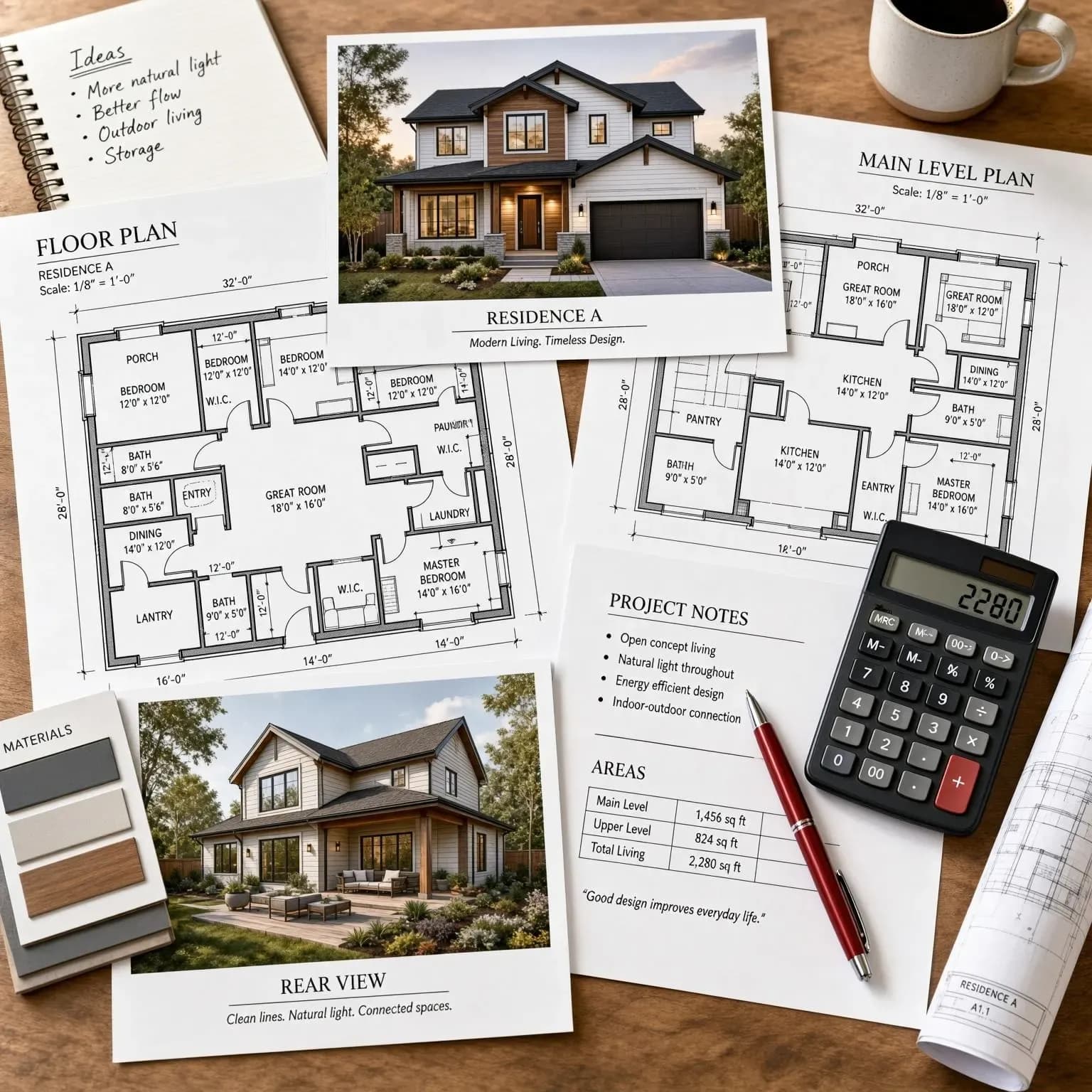
Search for a low cost simple 3 bedroom house plan in Kenya and you will find hundreds: a floor plan, a render, sometimes a price. What you rarely find is the reasoning that connects the drawing to the number.
A plan does not become low cost because someone labels it that way. It becomes low cost through decisions about its size, its shape, its roof, how far its beams span and where the kitchen and bathrooms sit. Those decisions are made at the design table. By the time the first block goes down in Kitengela or Kakamega, most of the budget is already set.
This is the first of four posts on designing a 3 bedroom home to a real budget. It starts with the honest numbers and what sits behind them.
For a simple 3 bedroom bungalow, 'low cost' in 2026 realistically means basic finishes at roughly KES 35,000 to 48,000 per square metre. Published figures for a whole 3 bedroom house run from about KES 2.5 million to over KES 12 million.
That spread is wide because the sources measure different things. Industry firms that publish cost guides put a basic rural finish as low as KES 25,000 to 35,000 per square metre and a Nairobi mid-range finish at KES 50,000 to 62,000. Another recent guide put a 100 square metre rural house in Western or Nyanza at about KES 5 million to 6 million. None of these come from an official body, and they disagree with each other.
Our planning figures, from our July 2026 cost guide
Prices are steady this year. Official construction price data from KNBS shows input prices fell 0.52 per cent in the first quarter of 2026, with annual construction inflation at 0.39 per cent. Steel bars got slightly cheaper, but their price index is still the highest of any material KNBS reports, so a steel-heavy design still costs more.
Most quotes and most online plan prices cover only the house: foundation, walls, roof, standard finishes, basic plumbing and wiring. On a modest budget, what they leave out can decide whether the project finishes.
Usually excluded
On family land in Murang'a or Siaya, that last line can be large if the nearest power line is some distance from the plot. Ask for every item in writing before you compare two figures. Our 2026 cost guide for diaspora clients sets out the full list.
A 100 square metre bungalow at basic finish needs a total budget of roughly KES 4.2 million to 6.2 million once fees and contingency are added, before land, external works and utilities.
100 m² three-bedroom bungalow, basic finish
On the same basis, our guide's 120 m² mid-range example comes to about KES 8.3 million, with the levy included.
These are planning figures, not a quotation. Your soil, your access road and your county will all move them. The free 2026 Kenya Construction Cost Guide walks through every line.
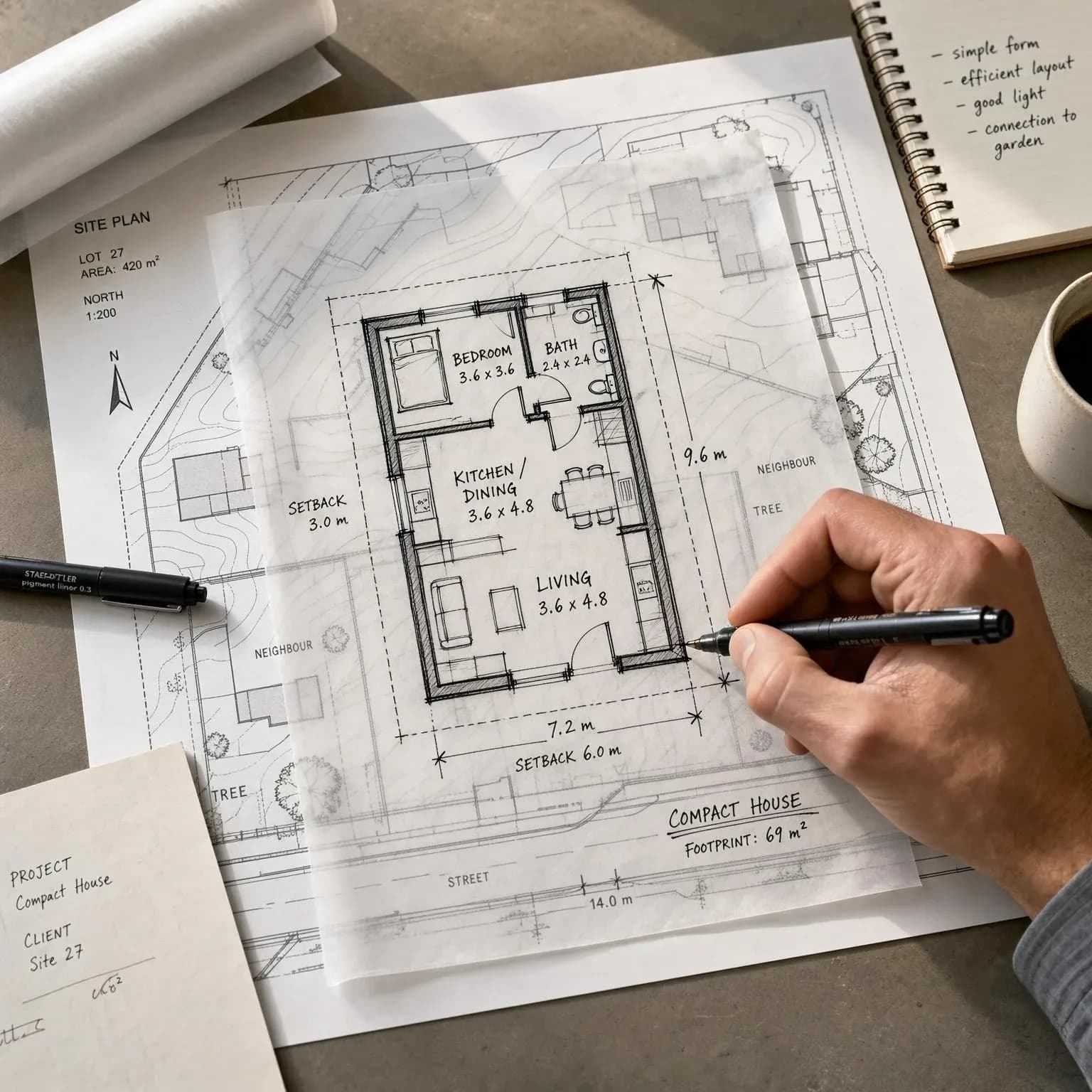
Once the drawings are approved, the room to save shrinks quickly. On site, the only levers left are cheaper materials and fewer finishes, which is how budget builds end up looking cheap.
At design stage, the levers are larger and cost very little to pull:
Later posts in this series take these one at a time.
A plan bought online for a few thousand shillings can be a useful starting point. It cannot be built or approved as it stands. Counties generally need drawings prepared by a BORAQS-registered architect and structural drawings from an EBK-registered engineer, fitted to your actual plot.
Questions to ask of any plan
A plan that answers none of these is a picture of a house. It is not yet a budget. Our post on the professional team every project needs explains who adapts it and when.
A small budget has less room to absorb a mistake. A KES 300,000 overrun hurts a KES 4 million house far more than a KES 20 million one. So the controls matter more on a modest build, not less.
A relative who visits the site on weekends is helpful. But that is no substitute for documented progress you can review yourself from Leeds or Doha.
A budget is easiest to hold when the people who draw the house also have to build it. When design and construction sit with separate parties, a plan can be drawn without anyone answering for its cost, and the gap shows up at tender or on site.
Integrated design and build is one sound way to close that gap, though not the only one. A capable architect, a quantity surveyor engaged from concept and a well-chosen NCA-registered contractor can achieve the same discipline. What matters is that someone owns the cost from the first sketch.
At Lesel Buildworks, design and construction sit under one contract, so the drawings and the cost plan are developed together and one party answers for both. If you are planning a 3 bedroom home in Kenya, we are happy to talk it through before you commit to anything.
Published figures run from about KES 2.5 million to over KES 12 million, depending on size, finish and location. A 100 m² house at basic finish costs roughly KES 3.5 million to 4.8 million to build, and a 120 m² mid-range house about KES 6.6 million, before fees, land and external works.
Usually, but mostly because rural houses are built to a simpler design and finish. Materials can cost more upcountry: areas far from the factories around Nairobi often pay a 10 to 15% transport premium on cement and steel.
It is a fine starting point for discussing layout. To build legally, a registered architect needs to adapt it to your plot and prepare approval drawings, and a structural engineer needs to design the foundation and structure for your soil.
Generally a simple gable or mono-pitch roof over a compact rectangular plan, because it needs fewer trusses, valleys and flashings. Roofing typically takes 10 to 15% of construction cost, so settle the roof form early in design.
The NCA levy of 0.5% of contract value applies to construction works above KES 5 million. Many basic 3 bedroom bungalows fall below that line and many mid-range ones do not. Confirm how it applies to your contract, particularly if you are managing the build yourself.
Many single-storey homes do not need a full environmental licence, but confirm this for your site early. Where an EIA licence is required, NEMA's fee is 0.1% of total project cost with a minimum of KES 10,000, and NEMA states a processing time of 45 to 90 days.
Keep 10 to 15% of the construction cost as a baseline. On a small budget, protect that money for genuine surprises such as poor soil rather than spending it on upgrades halfway through.
Yes, if the generosity comes from design rather than finishes: good proportions, daylight and how the rooms connect. The next post in this series looks at exactly that.
Similar Journals
Planning a Similar Project?
Lesel Buildworks helps homeowners, developers and diaspora clients move from early feasibility to coordinated design, approvals, construction and handover.